Neutrino Design - Human Design
- 4.1
- Rating
- 10.00K
- Installs
- Free
- Price
 Analysis by App-foxy
I approached Neutrino Design as a personal reflection tool rather than a typical horoscope app. Its focus is Human Design, and the experience is built around exploring that system in detail through a mobile interface. After spending time with it, I found the app most useful when I treated it as a structured way to ask better questions about my habits, decisions, energy, and relationships—not as a machine that should make choices for me.
That distinction matters. Human Design can feel very personal, but it is also easy to read a description and immediately turn it into a fixed label. I had a better experience when I used the material as a prompt for observation. Neutrino Design gives curious users a convenient place to return to those ideas, compare them with daily experiences, and build a repeatable routine around self-reflection.
The app is free to install, with optional in-app purchases ranging from $5.99 to $39.99 per item. It is listed for Everyone, which fits the calm, non-violent lifestyle focus. BitStream LTD is the developer, and the app has reached over 10K installs with a 4.1 average from around 187 ratings. Those numbers suggest a modest but active audience rather than a huge mainstream platform.
You May Also Like

 AccuWeather: Weather Radar
AccuWeather Review: A Quick, Clear Forecast for Everyday Decisions
For everyday plans, the best forecast is the one you can understand quickly. AccuWeather makes rain timing, radar, and local conditions easy to act on, with a few trade-offs.

 Hill Climb Racing
Why Hill Climb Racing Still Turns Crashes Into One More Run
A tiny car, a bumpy hill and one more upgrade: Hill Climb Racing keeps resurfacing because its simple chaos makes every near-miss feel personal.

 AliExpress - Shopping App
AliExpress Makes Global Shopping Feel Personal, but Shoppers Bear the Risk
AliExpress turns a global marketplace into a pocket-sized discovery engine. Its reach is useful, its shopping loop compelling, and its trade-offs easy to miss.

 Lords Mobile: Kingdom Wars
Lords Mobile Is a Kingdom-Building Routine, Not a Quick Match
A case-by-case verdict on the building, battles, device demands, and social commitments that make Lords Mobile rewarding for some players and exhausting for others.

 PDF Scanner app - TapScanner
TapScanner Makes Paperwork Easier to Capture, Check, and Share
TapScanner makes scanning with a phone feel less like a rescue operation and more like a dependable step in getting work done. Its capture tools are useful, though not flawless.

 Block Blast!
 Shows How Much a Puzzle Game Can Leave Out
A quiet grid game shows why puzzle players increasingly value instant clarity, repeatable skill and low-pressure play—and where the genre still needs to catch up.
More From Our News Desk
View All News


How I built a useful everyday workflow
My first recommendation is not to read everything in one sitting. Human Design material can become overwhelming when every section appears equally important. I started with the main information available in the app, noted the parts that felt immediately relevant, and then returned later with a specific question. That made the experience feel less like browsing a long reference book and more like using a personal journal with a framework attached.
A simple morning routine worked well. I would choose one idea to keep in mind during the day, such as how I respond to pressure or whether I make decisions too quickly. In the evening, I would compare that idea with what actually happened. This approach prevented me from treating the app’s interpretations as instructions. Instead, the content became a way to notice patterns that I might otherwise overlook.
A realistic example is a busy workday when several messages arrive at once and someone asks for an immediate answer. Rather than opening the app repeatedly for reassurance, I used it beforehand to establish a reflection theme. Later, I considered whether my response came from a clear preference or simply from urgency. That small habit was more useful than trying to extract a dramatic answer from a single reading.
The app also suits people who want to discuss Human Design with a partner or friend. I found that conversations were better when we compared how a concept showed up in real situations instead of arguing about whether a label was objectively true. If you share your chart or interpretation with someone else, I would keep the conversation voluntary and respectful. Personal-development tools are helpful only when they leave room for people to disagree.
One of the less obvious strengths is that the app can serve as a reference between deeper study sessions. I did not need to remember every term or explanation. I could return to the relevant area when a question came up, then close the app and think about it away from the screen. That makes it more practical than a one-time reading, especially for users who prefer gradual learning.
What to check before settling into regular use
The most important setting is the information you use to make the experience personal. Human Design depends heavily on accurate birth details, so I would double-check anything you enter before drawing conclusions from the resulting material. A small mistake can make the interpretation feel strangely disconnected from your experience, and the natural reaction may be to blame yourself rather than verify the starting point.
I also recommend checking how much detail you actually want to consume at once. The app’s purpose is “Human Design in detail,” and that depth is appealing if you enjoy systems and terminology. It can be less comfortable if you want a quick, plain-language summary. Experienced users will probably benefit from taking notes on unfamiliar concepts, while newcomers should resist the temptation to treat every technical term as equally urgent.
Notifications and phone habits are worth considering whenever an app becomes part of a reflective routine. I prefer opening Neutrino Design at a deliberate time instead of allowing self-analysis to interrupt work, sleep, or conversations. If your device offers notification controls, use them to protect the routine from becoming another source of digital noise. The point is to make reflection easier, not to create a constant reminder that you should be evaluating yourself.
Another useful check is your spending boundary. The app itself is free, but optional purchases are available. I would explore the free experience first and decide what kind of value you are looking for before buying anything. A purchase makes more sense for someone who already knows they will return to the material regularly. It is harder to justify if you are only mildly curious and may stop after one reading.
The current version is 10.53, and the minimum requirement is Android 8.0. That makes it accessible to many users with older Android devices, although the exact feel will still depend on the phone’s screen, speed, and software environment. I would also leave enough storage and keep the operating system reasonably current, not because the app demands a modern flagship, but because a smoother reading experience makes detailed content easier to navigate.
Faster patterns for people who return often
Once I stopped opening the app randomly, I found a faster pattern: arrive with one question, locate the relevant material, write down one practical observation, and leave. This four-step approach keeps the app from turning into an endless scroll. It is particularly helpful when the content feels persuasive, because it creates a pause between reading an interpretation and accepting it as a fact about yourself.
Another effective pattern is to group sessions by theme. I might spend one week noticing decision-making, another looking at communication, and another considering how I handle rest. This avoids jumping between unrelated sections and makes it easier to see whether an idea has any value over time. The trade-off is that this method requires patience; the app is more rewarding as a companion to observation than as a source of instant certainty.
I would also keep a separate note outside the app for phrases that genuinely help. That may sound basic, but it reduces repeated searching and lets you rewrite an abstract explanation in your own everyday language. I found that my own wording was often more useful than the original terminology when I needed to remember an idea during a stressful moment.
For couples or friends, a good shortcut is to compare experiences rather than profiles. Choose one topic, describe how it appears in daily life, and ask what each person notices. This is more productive than trying to decide who has the “better” design. It also avoids one of the common traps of personality systems: using a category to dismiss another person’s feelings.
Users who study Human Design more seriously may prefer a layered workflow. Begin with the broad interpretation, mark unfamiliar terms, then return only to those terms after you understand the overall picture. Reading every detail immediately can blur the main idea. Neutrino Design works better when you treat it like a reference library with a reading order you control, rather than a test that must be completed from beginning to end.
There is also a practical privacy habit I would recommend. Avoid entering or sharing more personal information than you need for your chosen use. If someone else is helping you explore the app, keep control of your own account and device. This is not a criticism of Neutrino Design specifically; it is simply sensible whenever a lifestyle tool invites personal details and intimate reflection.
Where the detailed approach reaches its limits
My biggest hesitation is that detailed Human Design content can sound more definitive than it should. Even when a description feels accurate, that feeling is not proof that the system can predict your behavior or explain every difficult event. I would not use the app as a substitute for medical care, mental-health support, financial advice, or a serious conversation with someone affected by my decisions.
The app may also frustrate users who want a conventional habit tracker. It does not replace a calendar, task manager, mood log, or meditation timer simply because it encourages reflection. If your main goal is to record sleep, schedule exercise, or monitor a measurable routine, a dedicated wellness app will probably be more efficient. Neutrino Design is better suited to interpretation and self-inquiry than to tracking concrete outcomes.
It is not the best choice for someone who dislikes spiritual or personality frameworks. You may find the terminology interesting, but the experience depends on being willing to engage with Human Design on its own terms. Likewise, users seeking a strictly evidence-based psychological assessment should look elsewhere. The app can support personal reflection, but I would not confuse that role with scientific diagnosis.
There is a learning curve, too. New users may encounter concepts that require repeated reading before they become understandable. That is not necessarily a flaw, since depth is part of the appeal, but it means the app rewards a slower pace. If you want a result that can be understood in a minute, the detail can feel like friction rather than value.
The optional purchases create another decision point. Free access lowers the barrier to trying the app, but the presence of paid items means users should be clear about what they expect before spending. I would never buy simply because a description makes me feel incomplete without an extra layer. Buy only when you have already established a regular use case and understand why the added material would change your experience.
The rating of 4.1 indicates a generally positive reception, but I would interpret it as a reason to explore rather than as a guarantee. Human Design is personal, and two people can respond very differently to the same explanations. A good rating cannot tell you whether the tone, depth, and worldview match your own preferences. The free starting point is therefore important: it lets you judge the fit yourself.
Who will get the most from it
I would recommend Neutrino Design to a curious beginner who wants a dedicated place to explore Human Design without immediately committing to books, courses, or long-form study. It is also a good match for someone who already knows the basic vocabulary and wants a mobile reference for revisiting ideas during everyday life.
It can be especially useful for reflective users who enjoy journaling. The strongest workflow is not “read an interpretation and obey it.” It is “read an interpretation, test it against a real situation, and decide whether it helps you notice something.” That habit turns the app from a passive content feed into a tool for examining choices with a little more distance.
People who enjoy comparing perspectives may appreciate it as a conversation starter. I would still keep the tone light and avoid using it to categorize friends, coworkers, or family members without their consent. Its value grows when it encourages curiosity, not when it becomes a shortcut for judging people.
I would skip it if you want hard measurements, clinical guidance, or a tightly organized productivity system. I would also skip it if you know that personality labels make you feel boxed in. In that case, a flexible journal or evidence-based mindfulness app may give you more freedom and less interpretive pressure.
My final view after making it a habit
After using Neutrino Design as a repeatable reflection tool, I see its strongest quality in the way it gives Human Design a convenient home on a phone. The free entry point makes it easy to investigate, while the detailed approach gives committed users material to revisit. I liked it most when I used short sessions, kept my own notes, and tested ideas against ordinary events instead of waiting for a perfect answer.
It is not a replacement for professional support, practical planning, or direct communication. Its interpretations should remain optional lenses, not rules. That limitation is also the key to using it well: the app is most valuable when it helps you ask a clearer question, not when it claims to make the decision for you.
For me, the best reason to try it is the combination of accessibility and depth. The app is free, rated for Everyone, and available to Android users running version 8.0 or later, while its optional purchases leave room for users who want to go further. BitStream LTD has created something that can fit into a quiet morning, a journaling session, or a thoughtful conversation.
Neutrino Design is worth trying if you are genuinely interested in Human Design and are comfortable approaching it with curiosity rather than certainty. If you build a small routine around one question at a time, it can become a useful personal reference. If you need objective diagnosis, measurable habit tracking, or instant answers, another kind of app will serve you better. For the right reader, though, Neutrino Design offers a thoughtful way to turn a complex framework into a more deliberate daily conversation with yourself.
FAQs for Neutrino Design - Human Design
01What is Neutrino Design – Human Design used for?
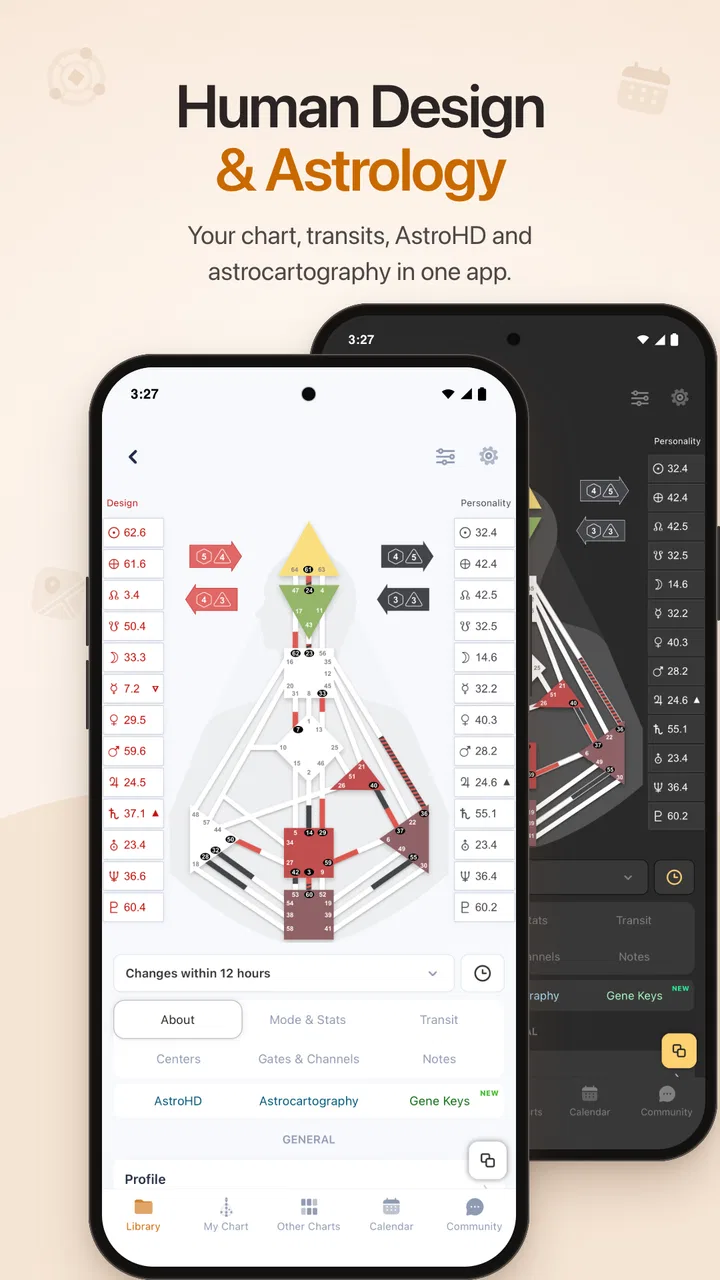
Neutrino Design – Human Design is designed to help users explore the Human Design system through a digital bodygraph, personal chart information, and explanations of different elements such as types, centers, channels, gates, and profiles. It is mainly an introspection and self-discovery tool rather than a scientifically validated personality test. The app can be useful for beginners who want a convenient way to study their chart and for experienced users who want reference material on a mobile device.
02What information is required to create a Human Design chart?
To generate a Human Design chart, the app generally requires your birth date, exact birth time, and birthplace. The accuracy of the result depends heavily on these details, especially the time of birth, because even a small difference may affect parts of the chart. If you do not know your precise birth time, you can still explore the app, but the resulting chart may be incomplete or less reliable for detailed interpretation.
03Does Neutrino Design provide explanations for every part of the chart?
The app offers explanations intended to help users understand the main components of a Human Design chart, including energy type, strategy, authority, profile, centers, gates, and channels. However, the amount of detail and the way information is presented may vary depending on the section or feature you access. Newcomers may need time to understand the terminology, while more advanced users may treat the app as a convenient reference rather than a complete course.
04Is Neutrino Design – Human Design free to use?
Neutrino Design – Human Design may offer free access to basic chart features while reserving some interpretations, advanced content, or additional tools for paid options. Availability, subscriptions, advertisements, and pricing can differ between Android and iOS versions and may change with updates. Before downloading or starting a trial, check the current store listing carefully, including renewal terms, in-app purchases, and whether cancellation must be completed through Google Play or the App Store.
05Is Neutrino Design suitable for beginners, and should its readings be taken literally?
The app can be a practical starting point for beginners because it brings Human Design concepts, chart visuals, and terminology together in one place. Nevertheless, users unfamiliar with the system may find some descriptions abstract or difficult to interpret without additional reading. Human Design is generally considered a spiritual or self-reflection framework, not a medical, psychological, or scientific diagnostic method. Treat the readings as optional guidance and personal reflection rather than fixed predictions or professional advice.
Pros
- Offers a clear
- visual way to explore Human Design concepts.
- Includes detailed chart information for personal self-reflection.
- Useful for users interested in energy types and decision-making styles.
- Clean interface makes navigating personal data relatively straightforward.
- Can encourage deeper exploration of personality and behavioral patterns.
Cons
- Human Design lacks broad scientific validation as a personality system.
- Some interpretations may feel generic or open to personal bias.
- Advanced chart details can be confusing for beginners.
- Personal readings may require additional purchases or subscriptions.
- Accuracy depends heavily on entering precise birth information.

Neutrino Design - Human Design
Gallery